Teltonika - FMC130
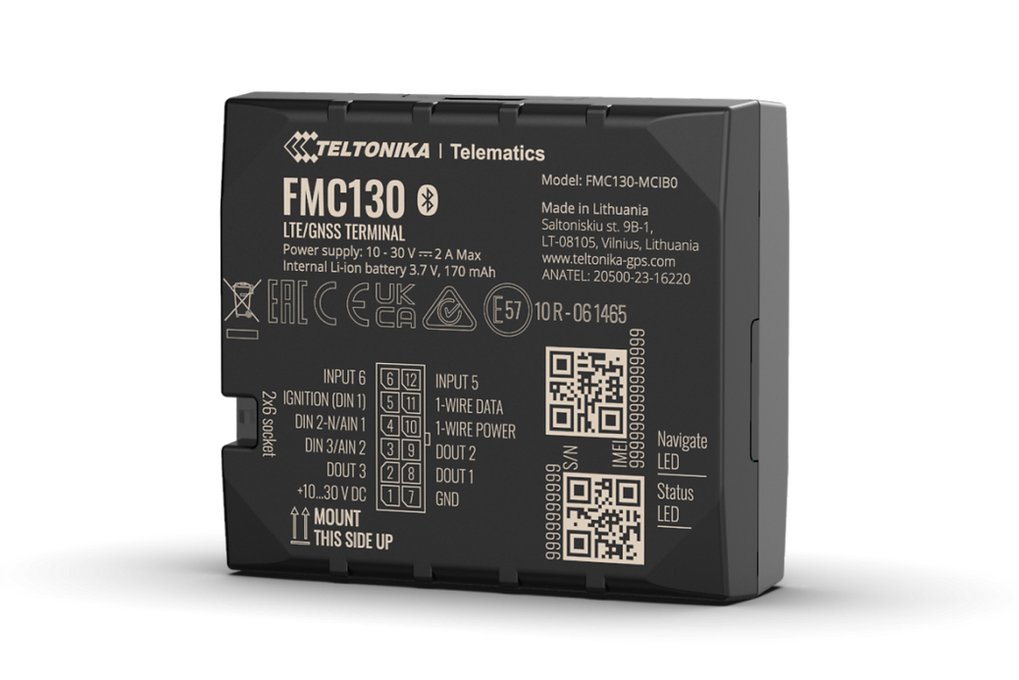
The Teltonika FMC130 is a Plaspy compatible GPS tracker built for modern fleet management. It combines cellular connectivity with an internal backup battery and a telemetry focused design to keep vehicles and assets visible during normal operation and temporary power interruptions. The device is positioned for fleet operators who need accurate location plus extended telemetry such as fuel monitoring and environmental sensing.
As a Plaspy compatible device, the FMC130 streams position and telemetry into Plaspy for live monitoring, reporting, and operational control. Its wired inputs, dedicated impulse fuel input, CAN adapter compatibility, and support for external Bluetooth sensors make it a practical option for fleets that want centralized visibility, remote actions, and device management through the Plaspy platform.
Key Highlights
- Plaspy compatible tracker with 4G LTE Cat 1 cellular connectivity and fallback to 2G for broad coverage
- Internal backup battery to maintain tracking and alerts during power interruptions
- Dedicated impulse input for precise fuel flow meter reading to support fuel monitoring
- CAN adapter compatibility for reading vehicle bus parameters and enhanced telemetry
- Bluetooth Low Energy support for external sensors and beacons to monitor cargo conditions
- Remote immobilizer and engine blocking capabilities for rapid anti theft response
- Remote firmware and configuration management to simplify fleet updates
How It Works with Plaspy
When deployed in a vehicle or asset, the FMC130 transmits location and telemetry to Plaspy where the data is normalized and presented for monitoring, alerts, and reporting. Plaspy provides a centralized interface to view live positions, replay history, and take remote actions based on events from the tracker.
- Live position and telemetry updates available in Plaspy for real time tracking and historical playback
- Vehicle signals and wired inputs reported to Plaspy so managers can create event driven alerts and filters
- Pulse based fuel data from the impulse input sent to Plaspy to support consumption analysis and loss detection
- Remote immobilizer control and other output actions can be triggered from the Plaspy console for theft response
- Bluetooth sensor readings forwarded to Plaspy to monitor temperature, humidity, and cargo status
Typical Use Cases
- Fleet management and dispatch for real time tracking and operational oversight
- Fuel monitoring and loss prevention using impulse input fuel flow data
- Anti theft response with remote immobilizer and alerts for unauthorized movement
- Cold chain and refrigerated cargo monitoring using Bluetooth sensors for temperature and humidity
- Heavy vehicles and special machinery telemetry via CAN adapter integration
Why Choose This Tracker with Plaspy
The FMC130 offers a balanced mix of connectivity, telemetry inputs, and accessory support that aligns well with Plaspy workflows for fleet operators. Its design supports continuous visibility even during power interruptions and provides data channels that help assess fuel use, vehicle condition, and cargo environment. These capabilities make it suitable for organizations that need both location tracking and richer telemetry without excessive complexity.
Paired with Plaspy, the FMC130 becomes part of a centralized telematics solution where managers can monitor fleets, receive event driven alerts, and apply remote controls when required. For detailed device specifications and the latest feature set consult the manufacturer documentation and consider Plaspy as the platform to collect, visualize, and act on the telemetry the FMC130 provides.
Learn more about Plaspy on the main website https://www.plaspy.com. Product specifications and availability can change over time, so verify current details on the manufacturer website https://www.teltonika-gps.com/.
Plaspy GPS Tracking Platform
Use compatible trackers with Plaspy
Monitor vehicles, assets, and operational activity from a single platform. Plaspy helps you work with compatible GPS trackers for visibility, reporting, and day-to-day fleet monitoring.